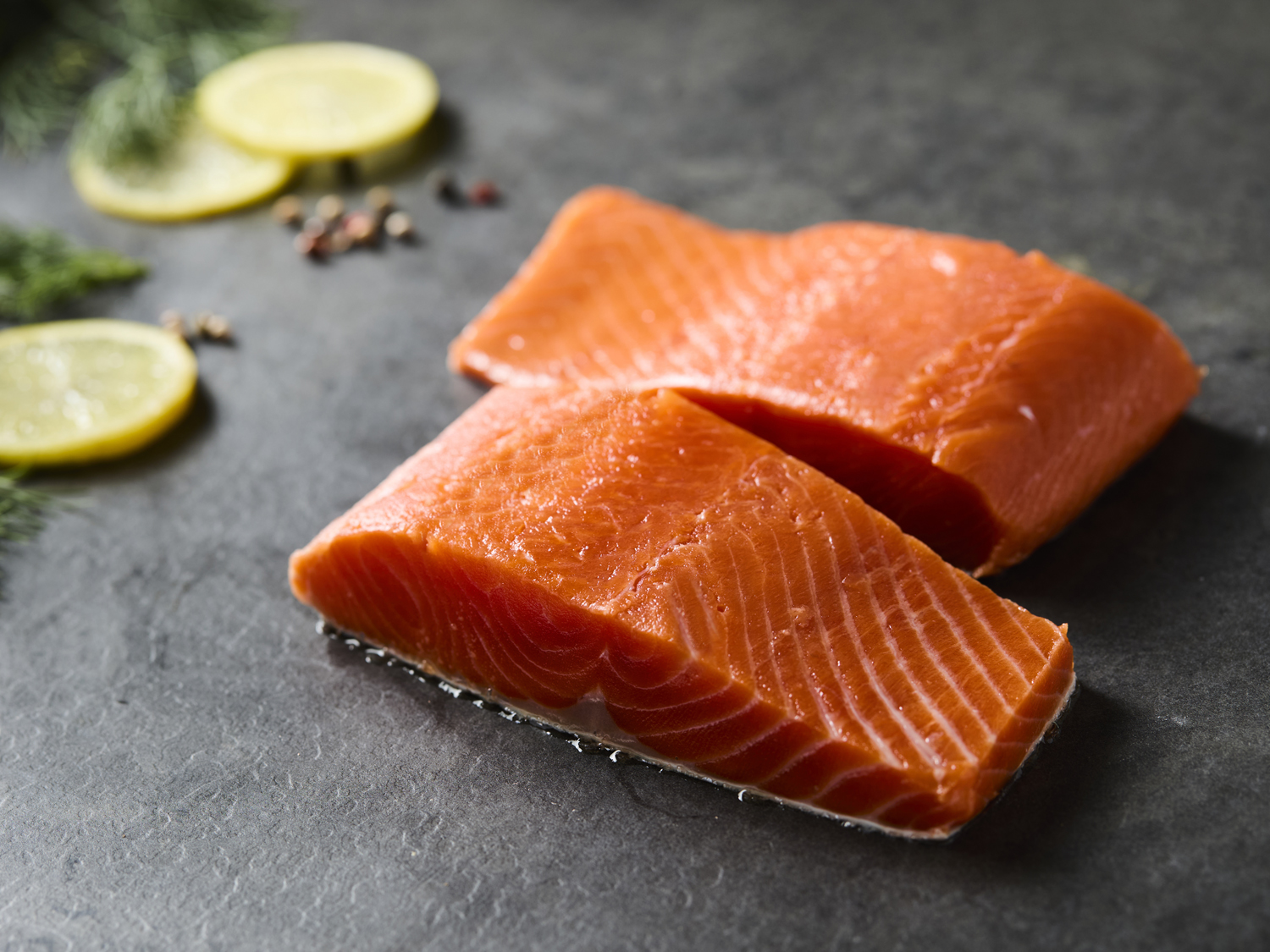
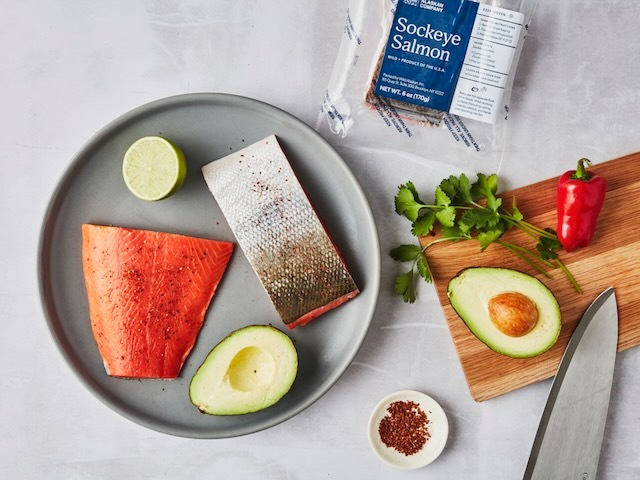
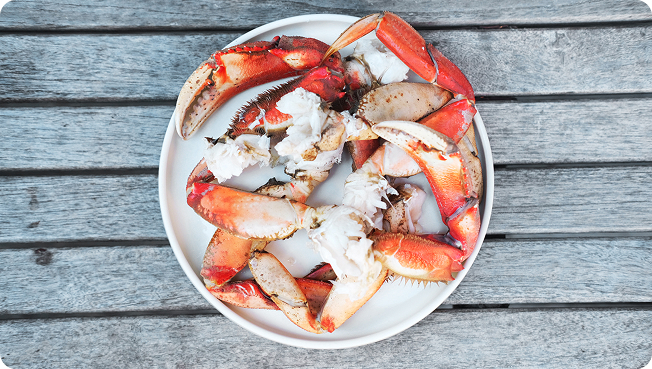
Most “fresh” fish at the grocery store isn’t actually fresh. Oftentimes, grocery store fish labeled “fresh” has already spent days—or even over a week—traveling on ice before it reaches the seafood counter. In many cases, it was previously frozen, then thawed for display. Once thawed, quality starts to decline fast. Flavor fades, texture softens, and nutrients break down the longer it sits on ice. You’re paying a premium for fish that’s already past its peak and on a clock the moment it hits the case.
Here’s an example of what that farmed salmon-to-store timeline can look like:
Day 0 – 1
Harvest & Processing
Harvested at a farm, often overseas, processed and packed on ice.
Days 2–3
U.S. Import & Distribution
Kept cold, but not frozen, which allows gradual degradation.
Days 3–7
Retail Display
Quality continues to degrade, fish can remain unsold for several days.
Shop Smarter:
If you buy fish from the "fresh" counter, look for the "Previously Frozen" (PF) tag. You are often paying a premium for the store to thaw the fish for you—meaning the clock is already ticking.
Why Frozen Preserves Quality
Freezing shortly after being caught is what halts the process of degradation. By freezing the fish promptly after harvest, it's preserved in its peak state—ensuring a level of quality and nutrient density that "fresh" fish simply cannot match.
Fish reaches -30°F, forming tiny ice crystals that preserve cell structure.
Freezing at peak freshness preserves the exact moment of optimal quality — texture, flavor, and nutrients intact.
Seafood frozen shortly after harvest maintains quality and can be stored safely for longer periods of time.
Safety, Taste, and Texture Compared
See how frozen seafood stacks up against "fresh" in blind taste tests and lab analyses. The results might surprise you.
Category
Frozen
"Fresh" Fish
Taste
Peak quality
Locked in at moment of catch
Variable
Steadily degrades in quality
Texture
Firm & flaky
Tiny ice crystals preserve structure
Often mushy
Cell breakdown during transport
Safety
Safer choice
Parasites killed, bacteria halted
Higher risk
More time for bacteria growth
Nutrition
Preserved
98% nutrients retained
Declining
Nutrients degrade over time
Shelf Life
24+ months
Cook when you're ready
2-3 days
Use immediately or waste
Convenience
Always ready
Use exactly what you need
Plan around it
Must use quickly
Sustainability
Less waste
Reduced carbon footprint
Higher footprint
More Spoilage
Blind Taste Test Results
In blind taste tests with trained panels, properly flash-frozen salmon performed as well as or better than “fresh” counter fish for texture, flavor, and overall quality. Source: Oregon State University seafood research, via OPB
Shipping Comparison
Frozen (Ground)
Low CO₂
"Fresh" Fish (Air Freight)
High CO₂
Environmental Impact & Shelf Life
Choosing frozen isn’t just better for your table—it’s a conscious choice for the planet. While "fresh" seafood often relies on carbon-heavy air freight to reach inland markets before spoiling, frozen seafood allows us to use much more sustainable ground and sea routes.
No air freight required — frozen seafood can travel by more efficient ground and sea routes
Less food waste— up to 40% of "fresh" seafood is discarded due to spoilage.
Portion control— cook what you need, keep the rest perfectly frozen for later.
Our Freezing Process: How It Works
From the moment that fish is harvested to the moment it reaches your kitchen, every step is designed to deliver peak freshness.
Wild-Caught
Harvest
Sustainably caught from the pristine waters of Alaska, using responsible fishing practices.
Prompt Preservation
Frozen at Peak Freshness
Frozen at -30°F promptly after harvest, locking in peak freshness at the moment of optimal quality.
At Processor
Vacuum Sealed
Individually portioned and vacuum-sealed to prevent freezer burn and maintain perfect texture.
On Your Schedule
Shipped Frozen
Packed with dry ice and shipped directly to your door, arriving frozen solid and ready to store.
When You're Ready
Your Kitchen
Thaw overnight in fridge or in cold water. Cook and enjoy restaurant-quality seafood at home.
Easy Thawing Guide
Overnight Method
Remove fish from packaging and let thaw in refrigerator 12-24 hours before cooking. Best for optimal texture.
The "Quick" Method
Transfer fish from vacuum packs to resealable zip-top bag. Submerge in cold water for up to 1 hour. Perfect when time is short.
We made a deliberate choice to only sell frozen seafood because we believe it delivers the best possible quality to your table. Unless you live dockside in Alaska, frozen seafood is the closest you can get to just-caught quality and taste.
Quality Guarantee
Every piece meets our strict standards for taste, texture, and sustainability.
Transparent Sourcing
Strict sourcing guidelines allow us to ensure that every catch meets our standards for quality and transparency.
Convenient & Flexible
No more racing against the clock. Cook restaurant-quality seafood on your schedule, not the fish counter's.
Everything you need to know about frozen versus fresh seafood.
Is frozen fish better than fresh fish?
In most cases, yes. Unless you live near a fishing port and can buy fish the same day it's caught, frozen seafood will be fresher than what's labeled 'fresh' at the grocery store. 'Fresh' fish has often been in transit for 2-14 days, while frozen fish is locked in at peak quality within hours of being caught.
Is frozen seafood as healthy and nutritious as fresh?
Absolutely. Studies show that properly frozen seafood retains up to 98% of its nutrients. Because it's frozen at peak freshness, it often has higher nutrient levels than 'fresh' fish that has been slowly degrading during transport. The omega-3 fatty acids, protein, and vitamins are all preserved.
How can I tell if frozen seafood is high quality?
High-quality frozen seafood should be individually vacuum-sealed to prevent freezer burn and preserve its natural texture. Additionally, look for transparency: a reputable provider will clearly state the species and the country of origin of your fish. The best indicator of quality is buying it from a reputable source.
What's the best way to thaw frozen fish?
The gold standard is overnight in the refrigerator (12-24 hours). This slow thaw preserves the best texture. For a quicker option, remove seafood from packaging and place in a resealable bag, then submerge in cold water for 30-60 minutes, changing the water every 30 minutes. Never thaw at room temperature or in warm water.
How long does frozen seafood last?
When kept at 0°F or below, properly frozen and vacuum-sealed seafood maintains peak quality for 12-24 months. Even after that, it remains safe to eat — just with some gradual decline in texture. Compare this to 'fresh' fish, which should be cooked within 1-2 days of purchase.
Is frozen seafood more sustainable?
Frozen seafood generally requires less air freight and produces less food waste than 'fresh' alternatives.
Does frozen fish taste different from fresh?
When properly frozen and thawed correctly, most people cannot tell the difference in blind taste tests — and many actually prefer the frozen fish. In fact, professional chefs increasingly use flash-frozen seafood because of its consistent quality and reliability.
Ready to Taste the Difference?
Experience restaurant-quality, wild-caught Alaskan seafood delivered to your door. Frozen at peak freshness, ready when you are.